Reconstruction of the Caisse Desjardins Portugaise

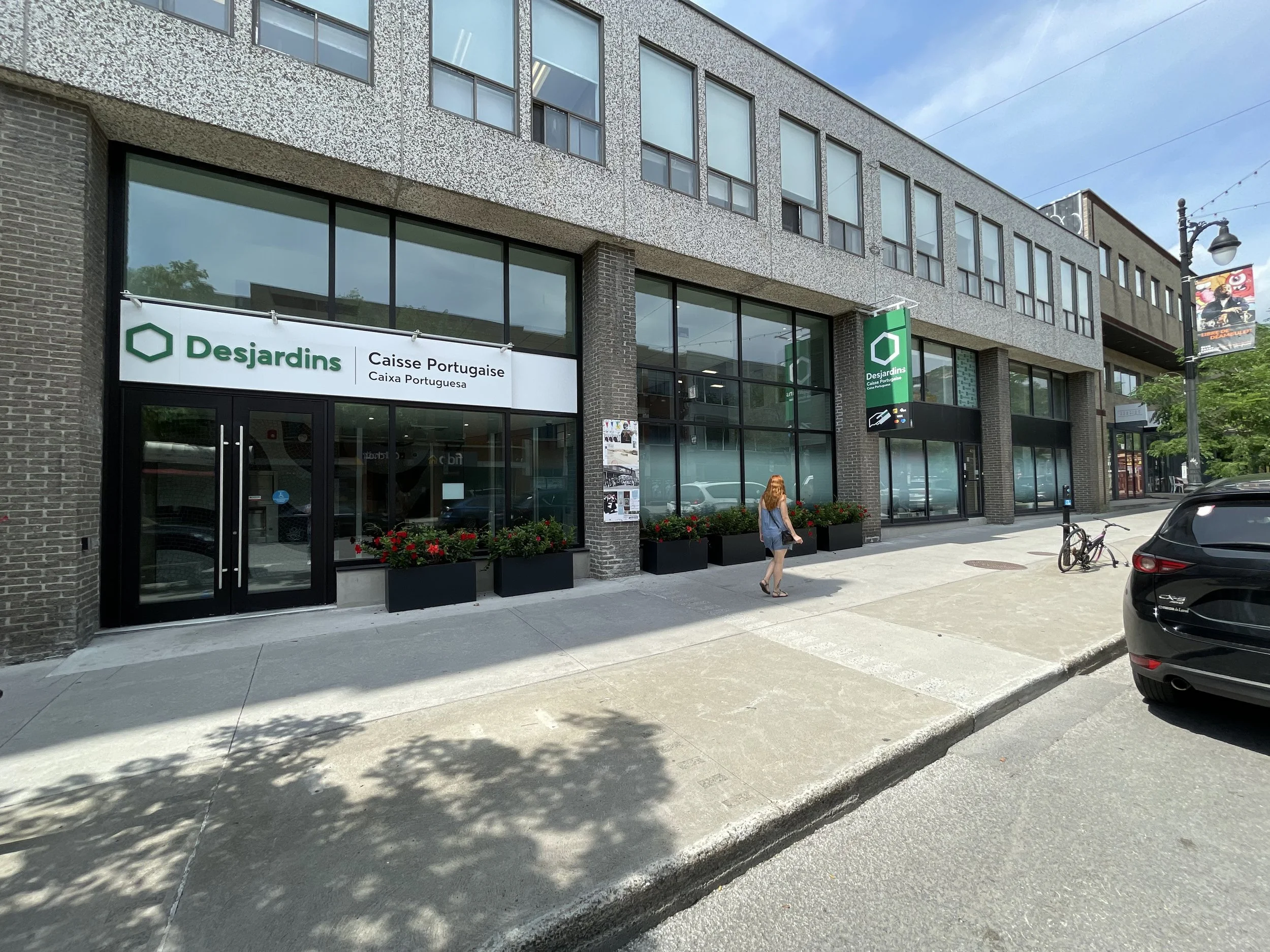
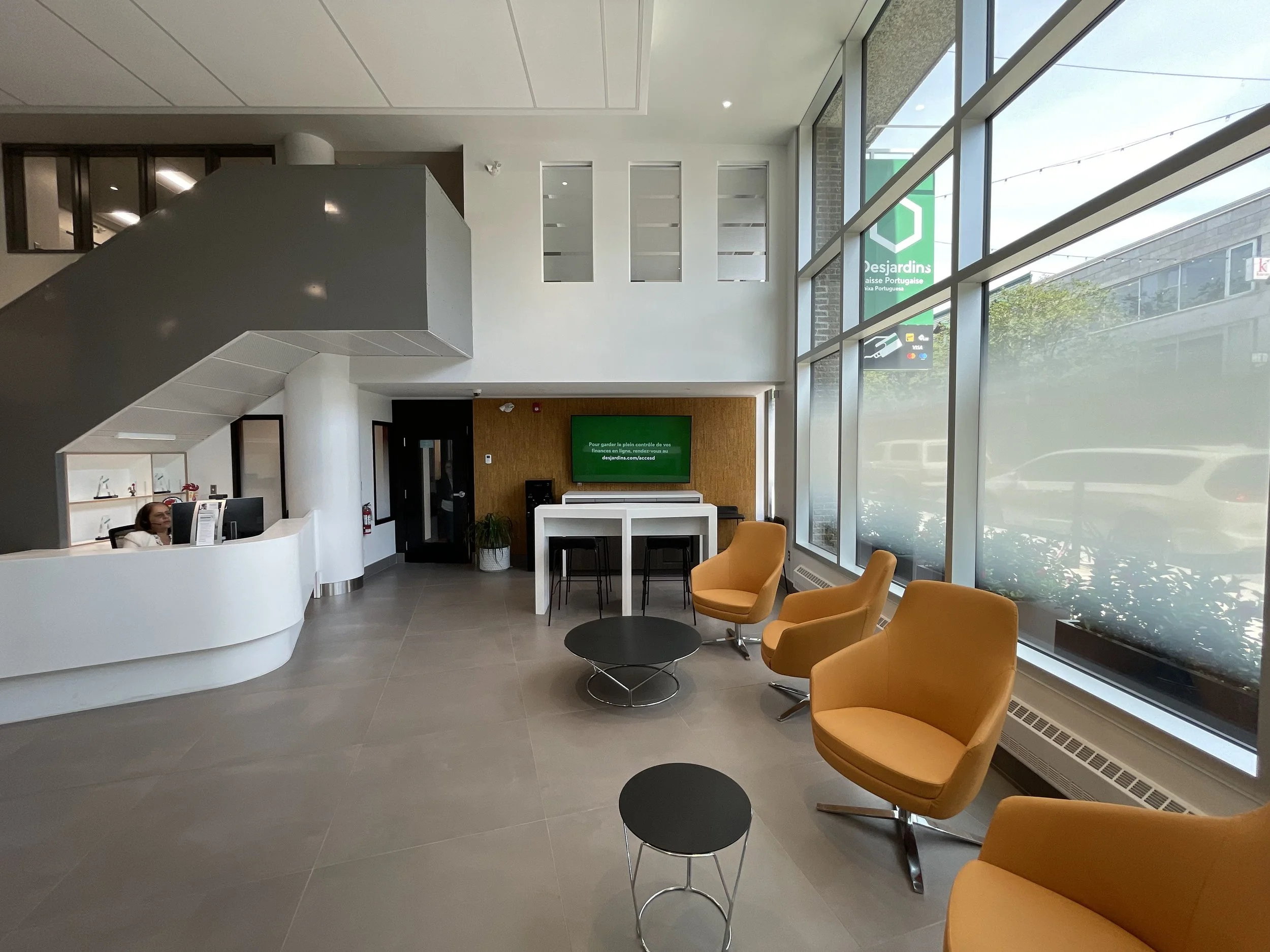
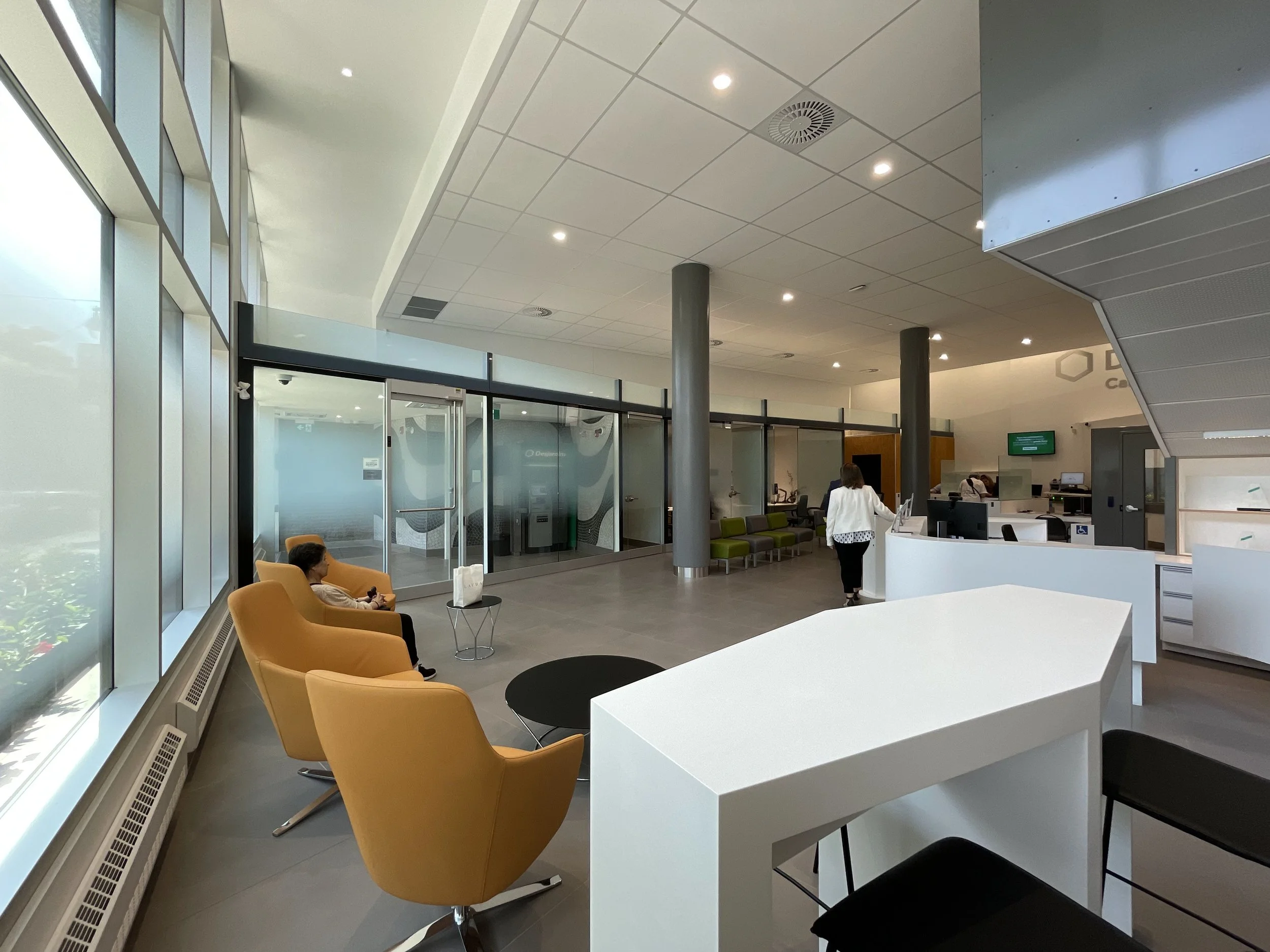
The project involves the reconstruction and modernization of the workspaces and reception areas of the Caisse Desjardins Portugaise, member of the largest cooperative financial group in Canada, offering personal banking, insurance, and investment services. It aligns with the Desjardins Group's overall vision, espousing its commitment to a green, transparent, and socially responsible future. This missions pursues the role of economic, social, and cultural driver envisioned by the Portuguese founders of the Caixa de Economia dos Portugueses de Montréal in 1969.

The Caisse has always played a vital role in the Portuguese community, and this project aims to ensure its long-term development and growth within the Plateau Mont-Royal borough. The project's objective was to attract a younger clientele and ensure the Caisse's vitality and renewal, providing high-quality workspaces to retain a team of dynamic, motivated, and innovative professionals.

The Caisse's program consists of the following interventions:

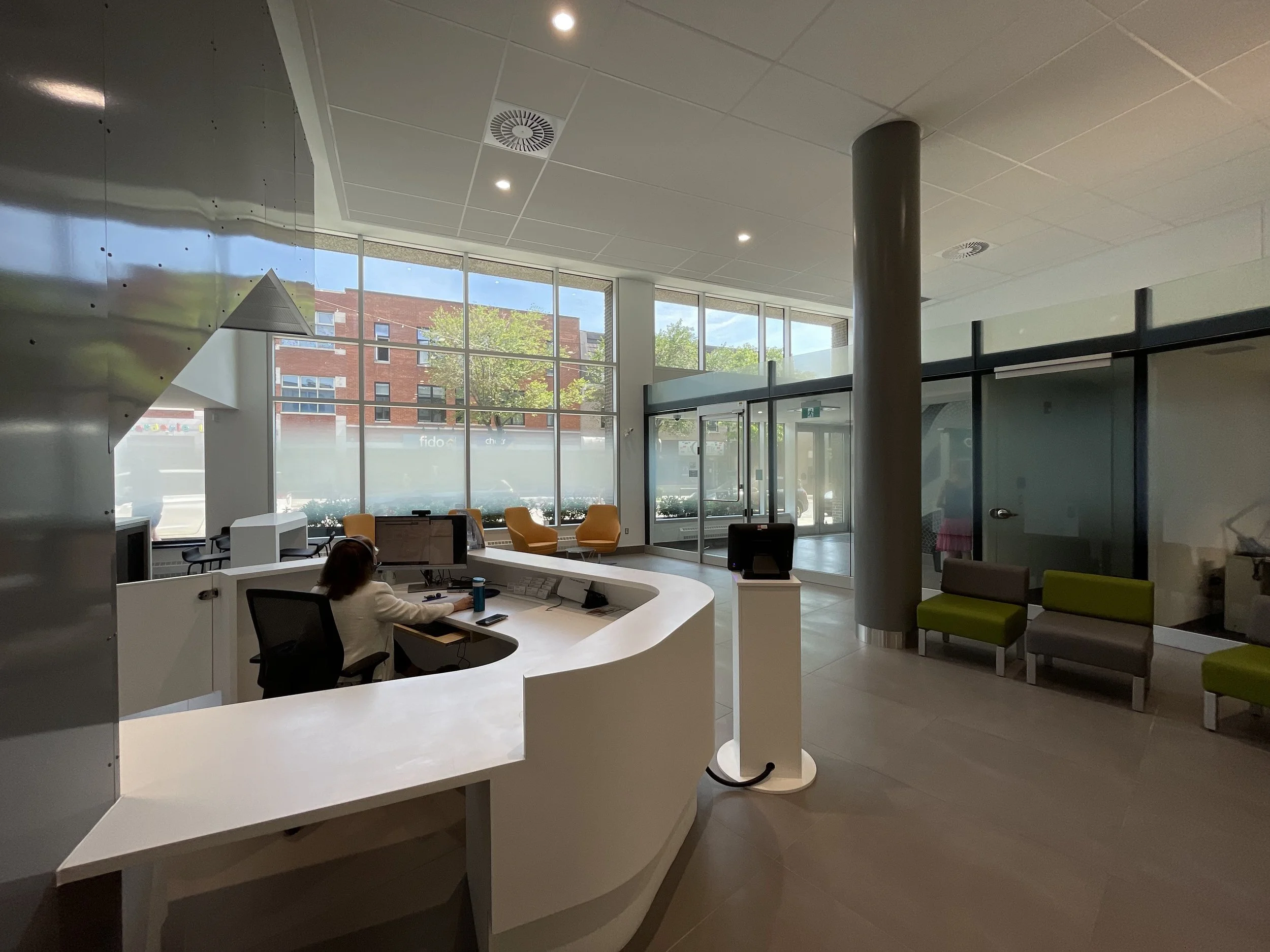
  • Reconfiguration of the reception area and transaction counters, and the addition of a coffee corner;

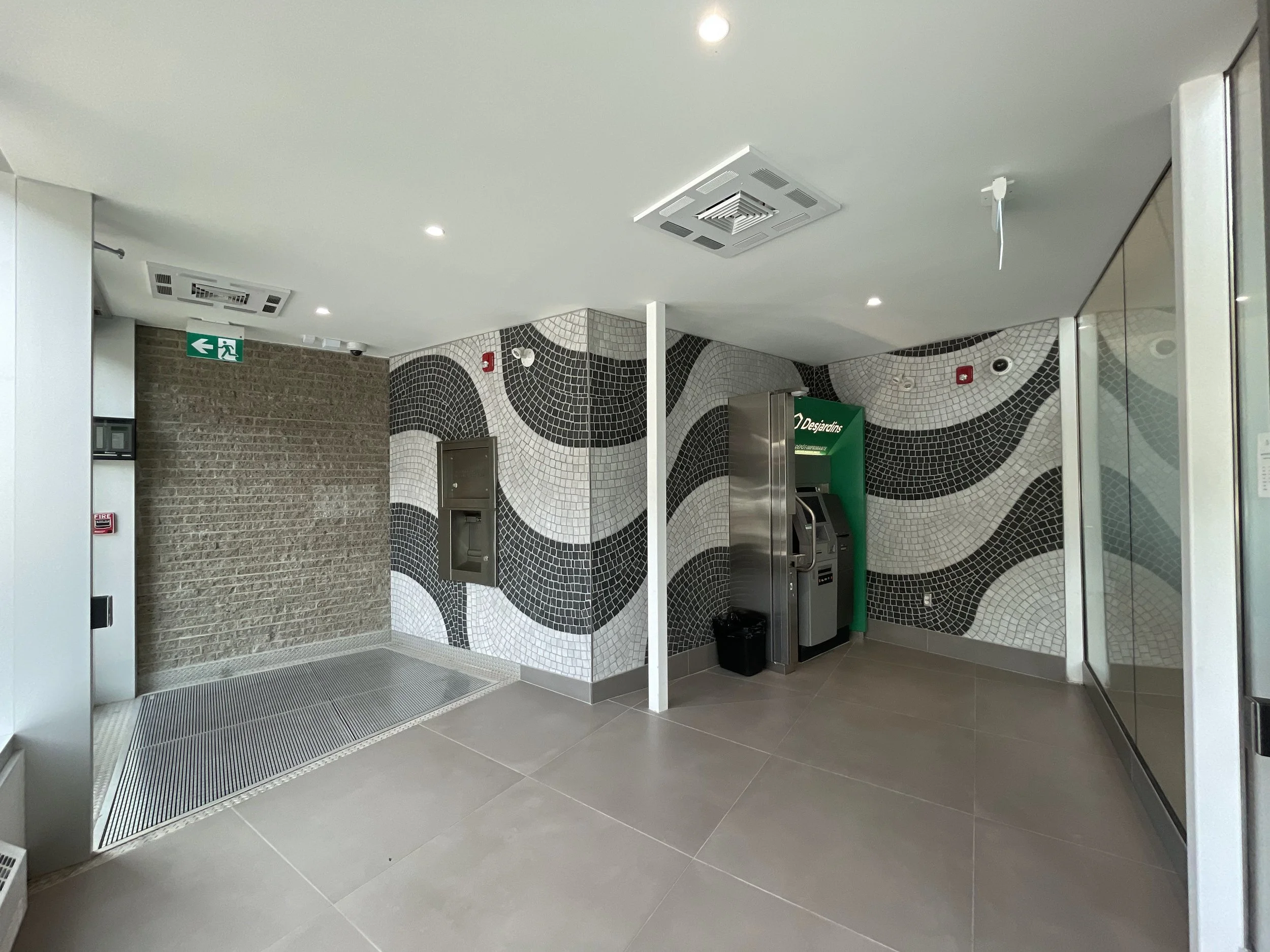
  • Transformation of the main entrance and redesign of the bank machine lobby;

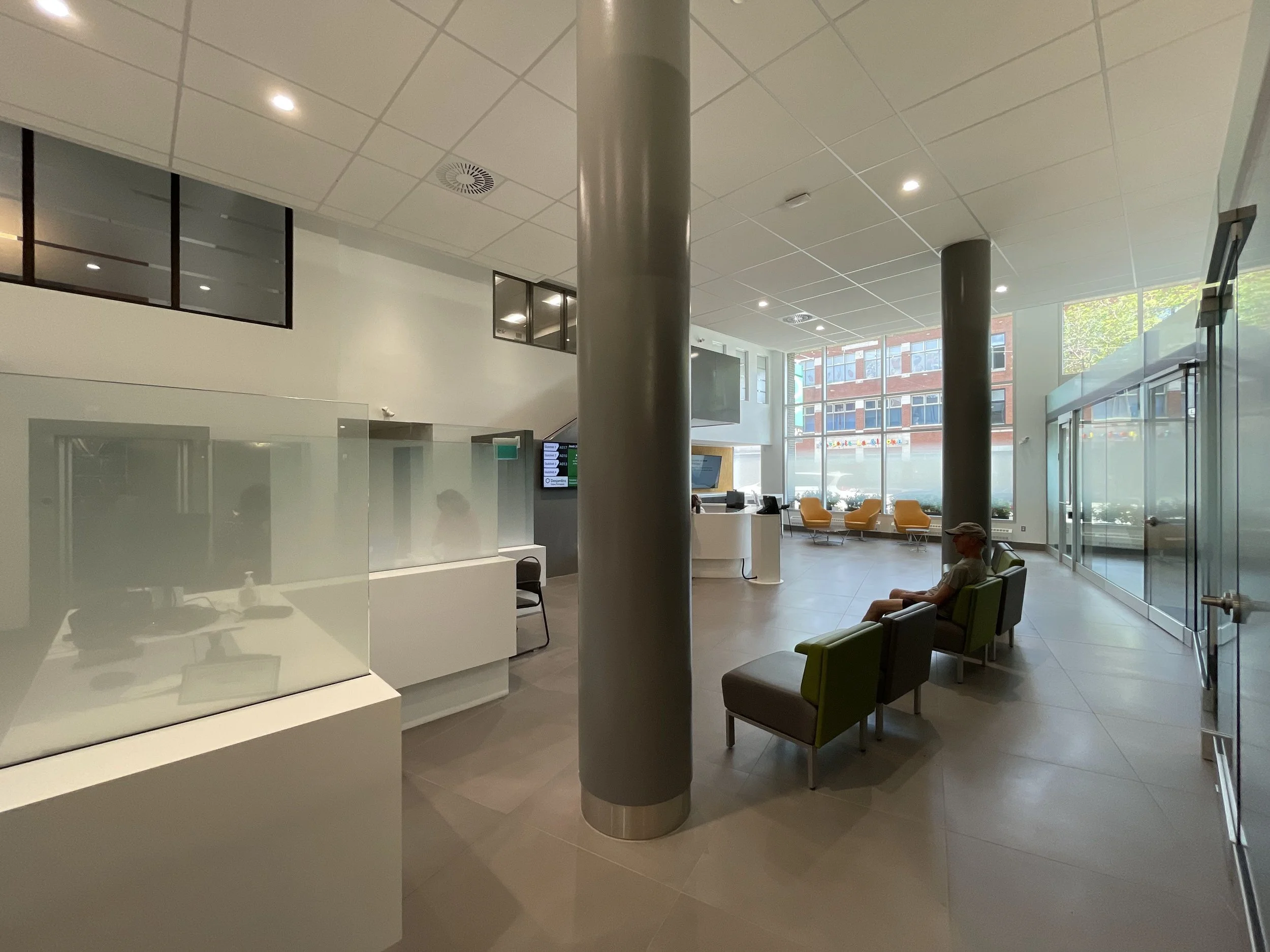
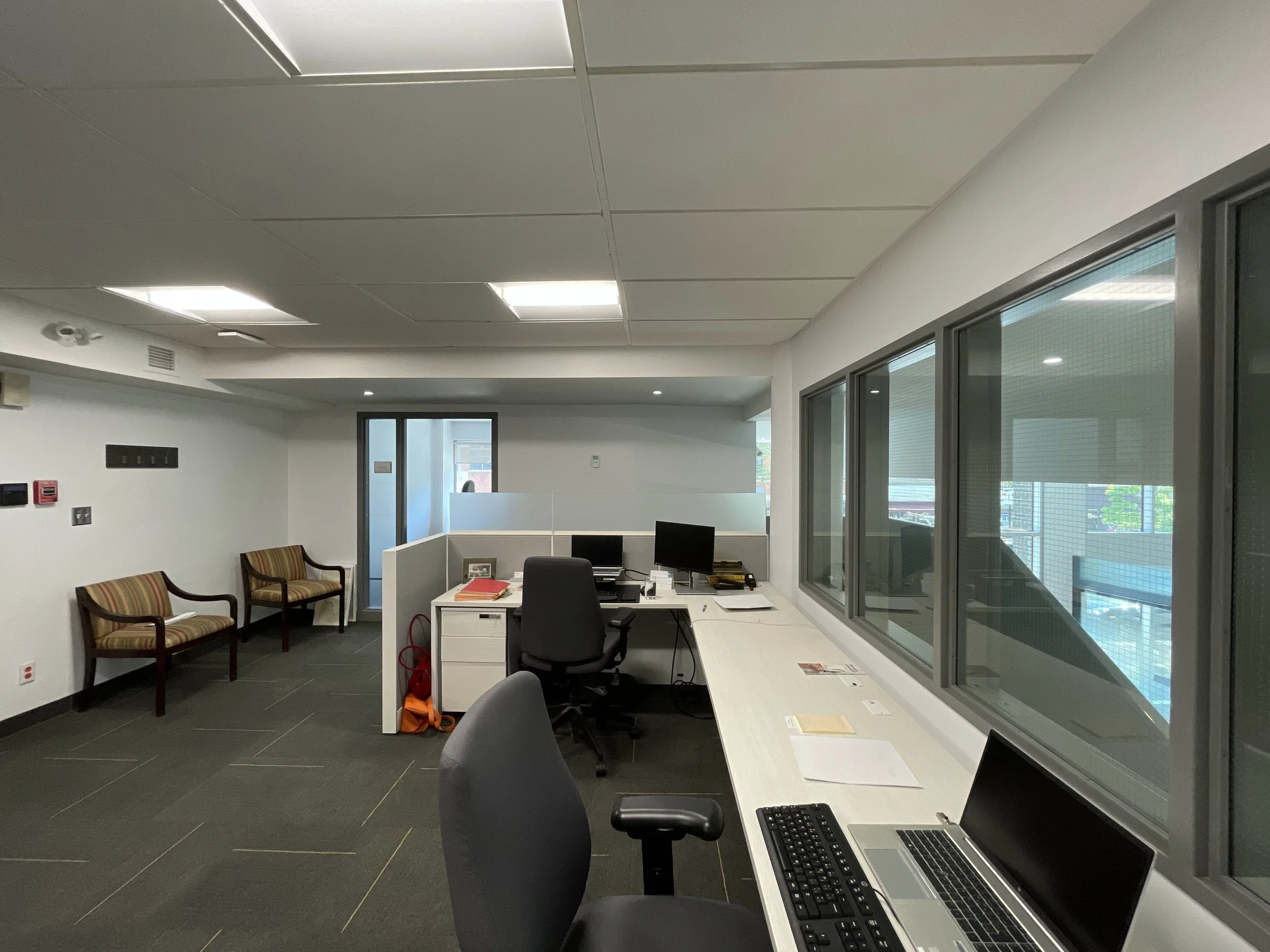
  • Creation of a contemporary, luminous, welcoming and universally accessible reception and waiting area;

  • Renovation of the restrooms, including the installation of a shower and changing room for cyclists;

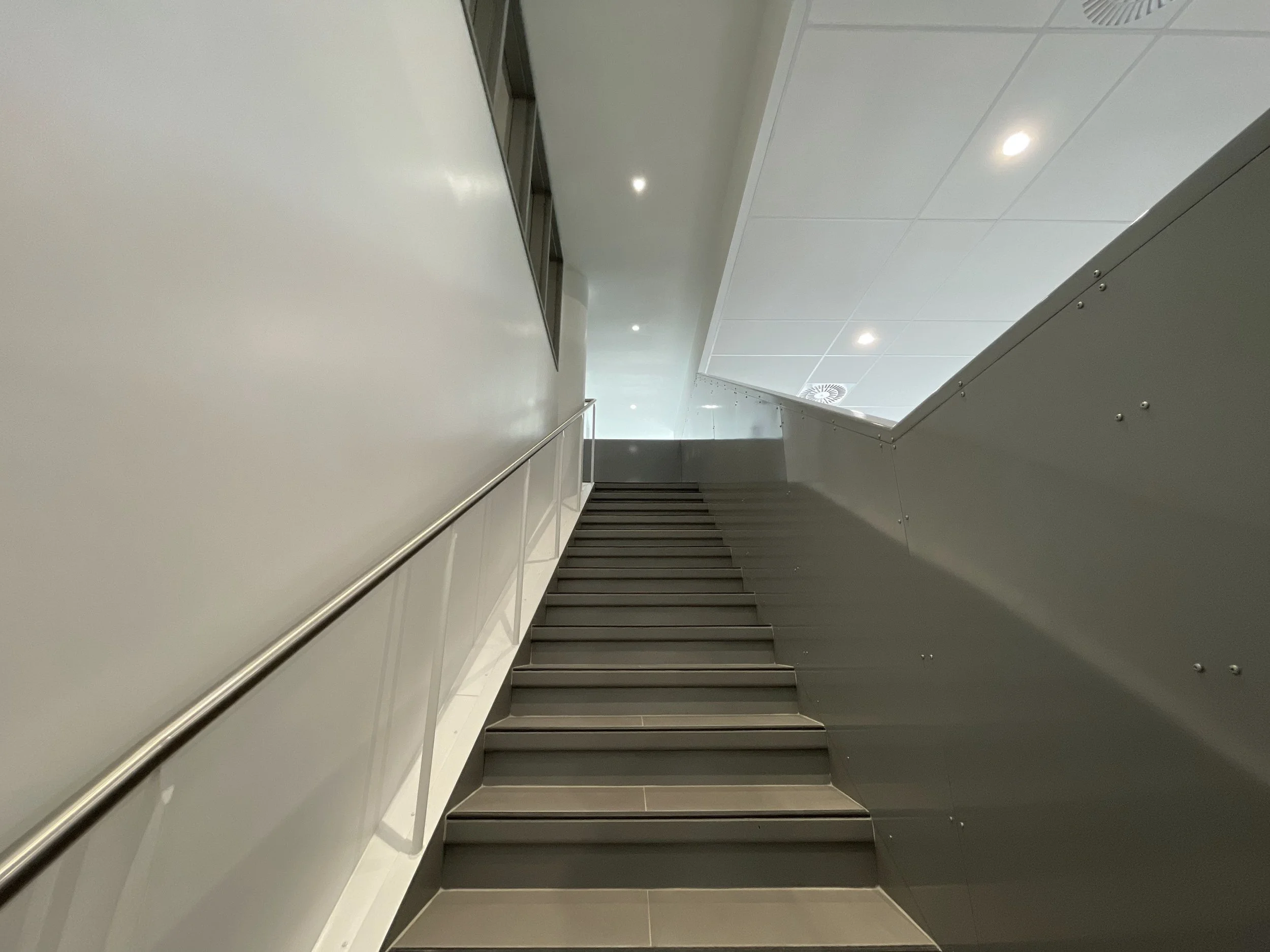
  • Updating of all finishes, including ceilings, partitions and flooring;

  • Redesign of the security deposit box consultation room to render it more accessible, ergonomic, and private;

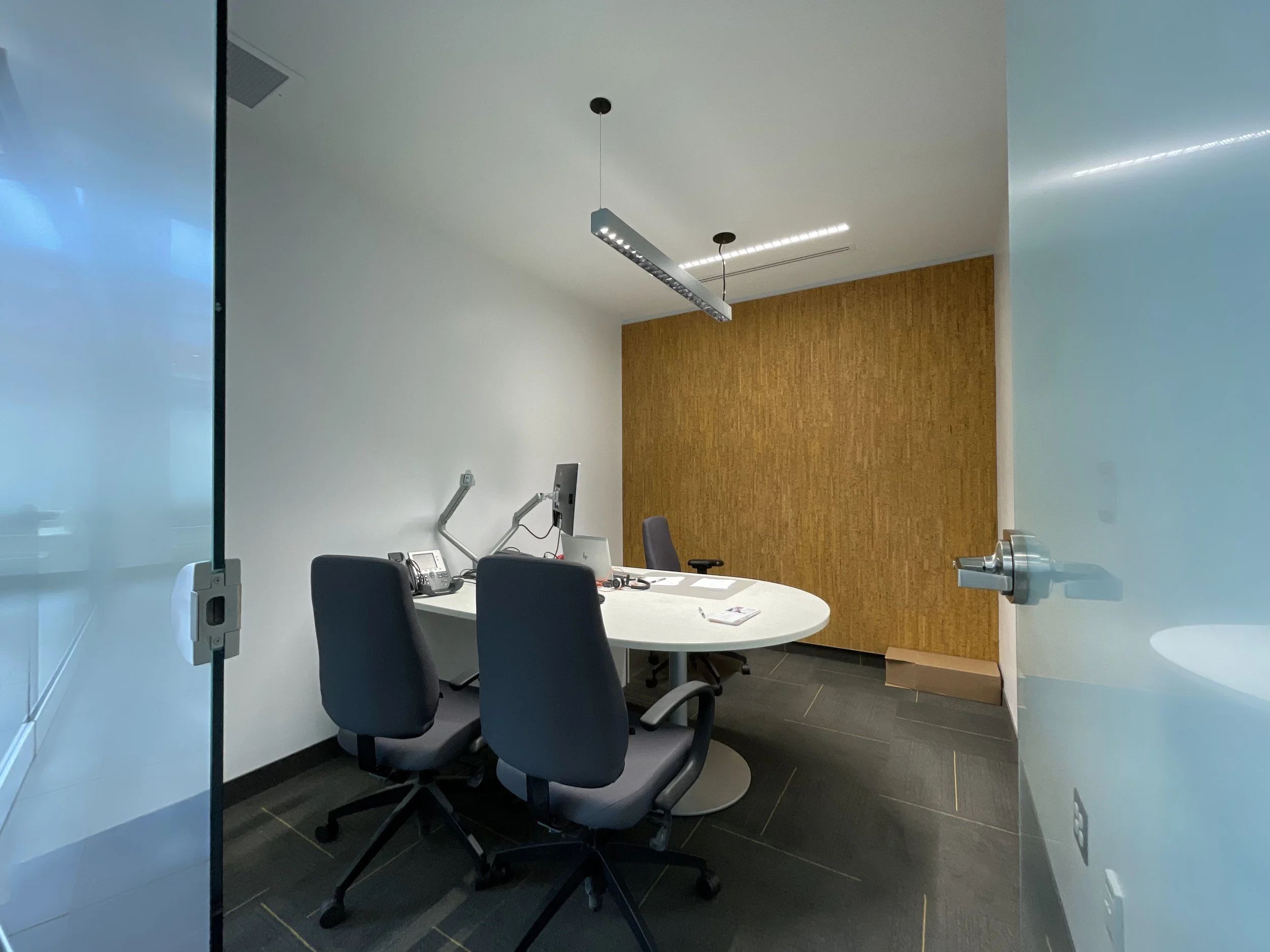
  • Addition of closed offices opening onto the reception area to accommodate various professionals and clients requiring discretion and expert financial advice, and open-plan offices on the mezzanine level;

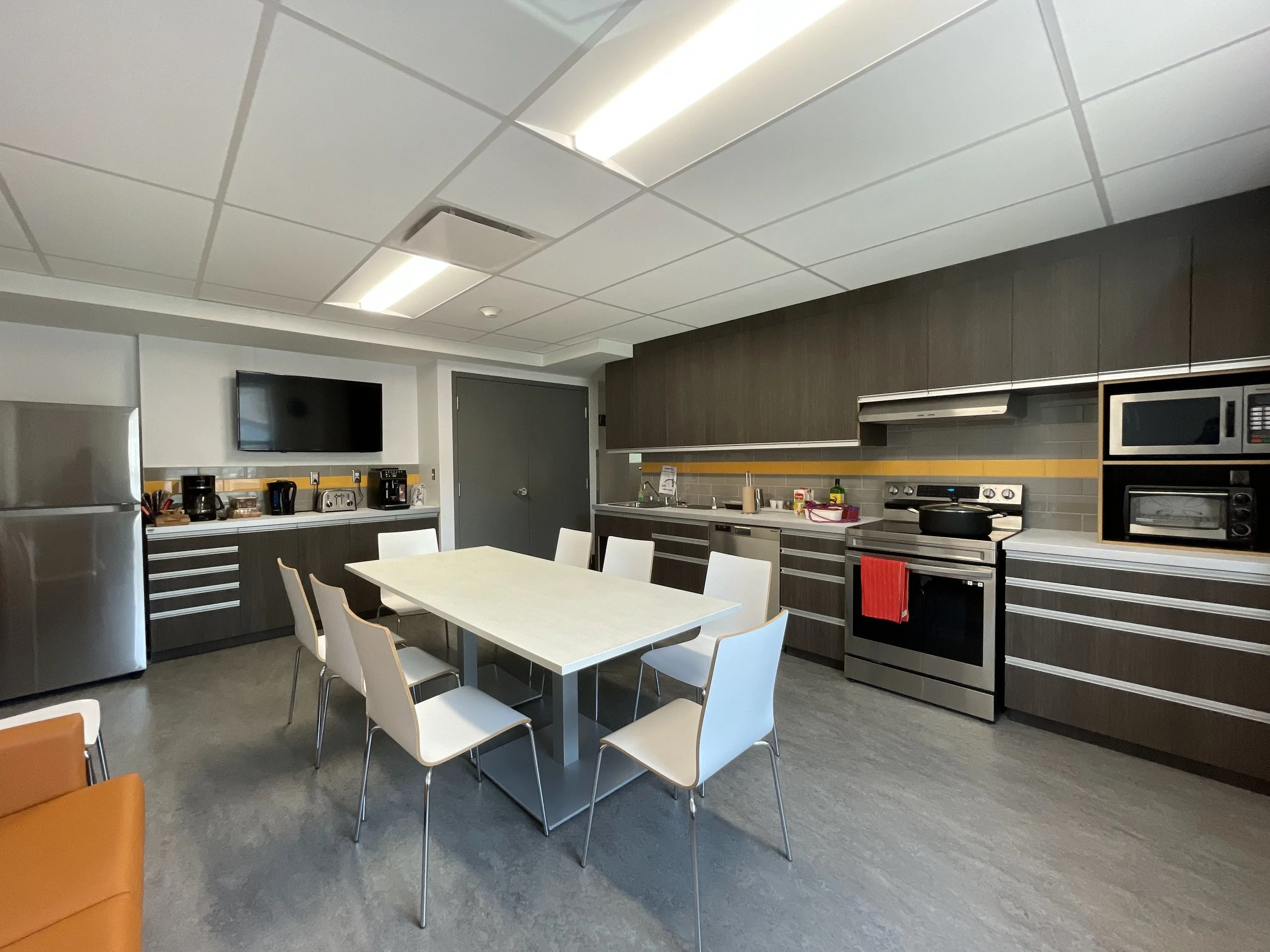
  • Redesign of the kitchen and lunchroom;

  • Integration of the architectural lighting realized jointly with the German lighting designer Anselm Von Held;

  • Integration of materials and aesthetic inspired by Portugal, including cork wall surfaces and traditional tile work which reflects a deep respect for the local community culture.

The improvements were designed and carried out in compliance with applicable codes and standards and include the upgrade of security, structural, and electromechanical systems, all of which was coordinated by EKM architecture and environmental design.

Learning Commons, Faculty of Education, McGill University

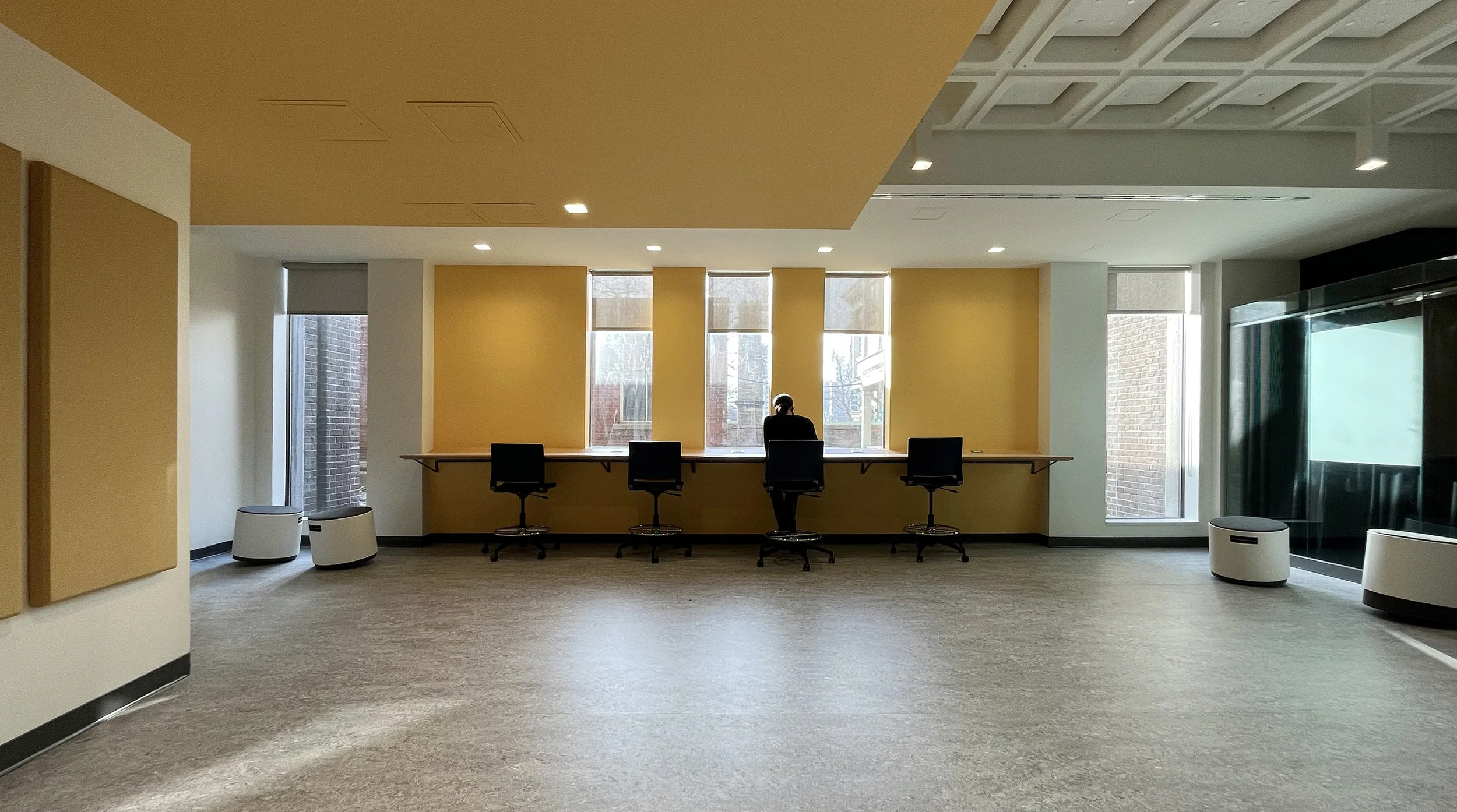
Situated on the first floor of the Education Building at McGill, this former library space has been reimagined to address contemporary needs of university students for dynamic, connected, social, study, teaching and learning infrastructure. The new Learning commons proposes a variety of environments designed to respond to a diversity of teaching approaches, learning needs and study styles.

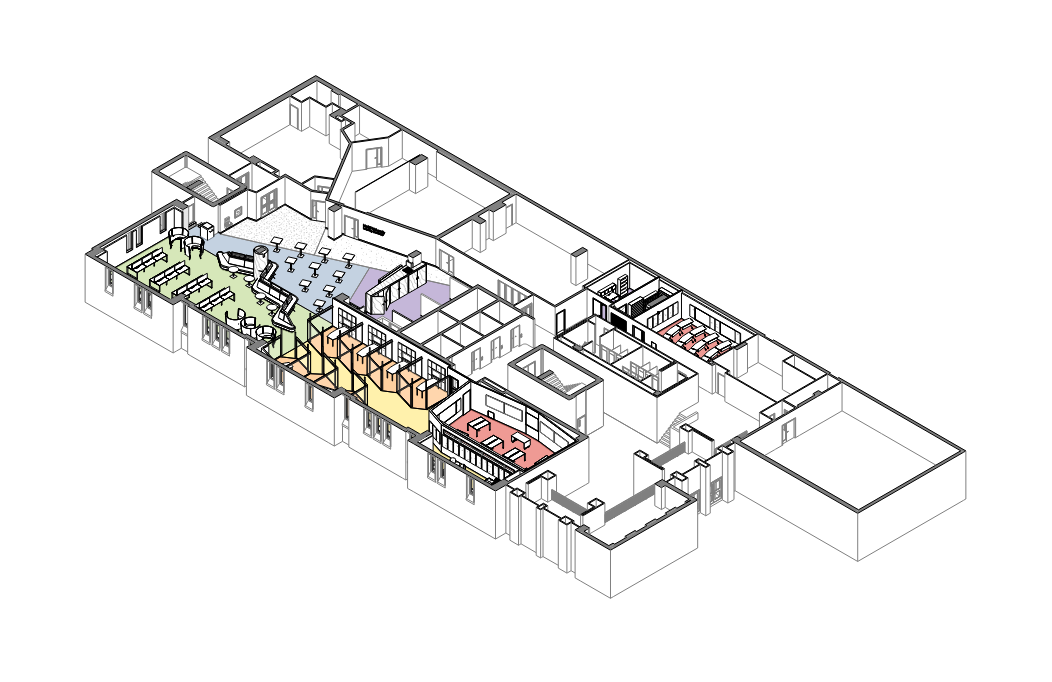
The Commons is organized in a logical sequence from the main public and noisy spaces, towards more intimate and quiet study and teaching areas. Upon arrival, students enter the Multi-functional room where standing height tables offer a range of possible uses, from touch and go studying, to conversations and cocktail events. An oversized circular column embraced by the spine of the Serpentine Banquette marks the boundary between informal and formal study zones and serves as conduit for cabling to power work areas. Six partially enclosed glass study pods, divided by acoustic curtains which can be drawn in order to provide intimacy, lead from the gregarious multi-functional space through a series of other environments towards the solo together Learning lounge, conceived for students seeking more tranquillity with views onto the outdoor rooftop garden.

A high-performance partition divides the Learning lounge from the computer lab. This space, a high-tech classroom and computer lab, features wall-mounted screens, white boards, and computer workstations with a capacity of 32 equipped with dual source screens on pivoting arms in order to respond to a variety of different assignments. A separate active teaching classroom is equipped with cameras and audio recording capacity, providing simultaneous and integrated remote learning and or recording of class activities, both of the teacher’s lectures as well as of the student’s interaction. Enveloped by acoustic wall treatments, white boards, and interactive Smartboards, this classroom is equipped with mobile furniture that allows for rapid rearrangement to accommodate a variety of learning environments, from lecture style teaching to more intimate project-based group work.

In order to ensure a comfortable environment for a variety activities, lighting has been conceived to create distinct ambiances for different study modes and improve the overall lighting quality and luminance on work surfaces. In addition to the attention to light and views, ambient noise is reduced using a variety of high-performance acoustic wall treatments and ceiling tiles, including circular acoustic clouds which are suspended below the 1960’s concrete waffle slab.

This project shows that working within a high-quality 1970’s brutalist building, it is possible to create a dialogue with noble modern architecture, while responding to contemporary needs of the 21st university.